
News
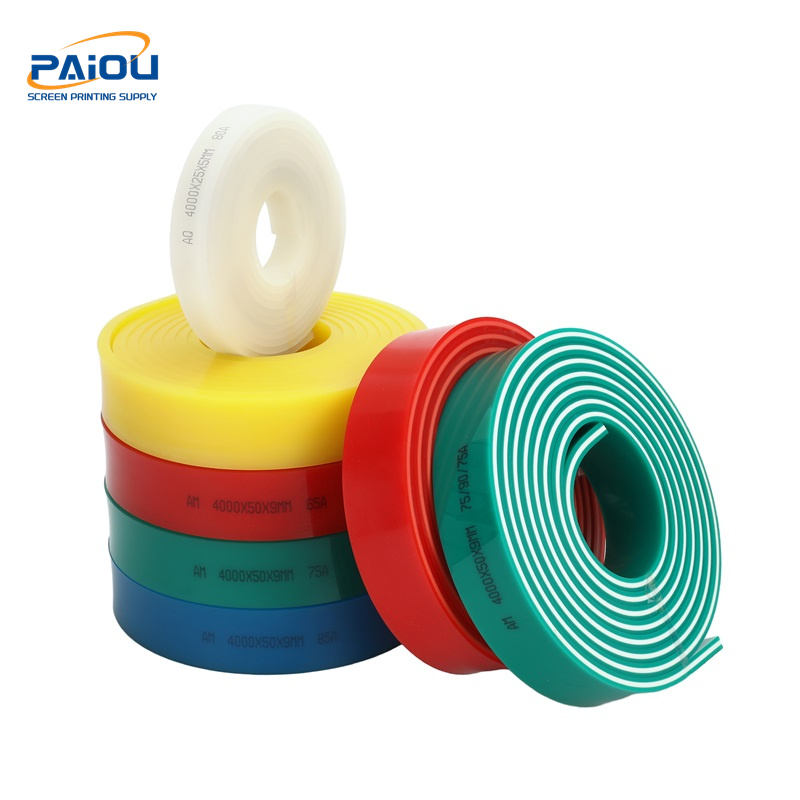
Why is squeegee maintenance necessary in screen printing?
The squeegee is a core consumable in screen printing, directly determining print quality, screen lifespan, and production stability. Neglecting maintenance will directly lead to problems. There are five main reasons:
1. Ensuring printing accuracy and ink uniformity: The sharpness and smoothness of the squeegee blade determine the ink application and pressure uniformity. Wear, chips, or deformation of the blade will directly cause stringing, missed spots, uneven ink thickness, misregistration, and rough edges, significantly increasing the batch defect rate.
2. Extending the squeegee's lifespan and reducing costs: High-quality polyurethane squeegees are expensive. Rough use and lack of maintenance will accelerate aging, cracking, swelling, and chipping, leading to frequent replacements and significantly increasing production costs.
3. Protecting the screens and reducing screen damage: Chips or hard particles on the squeegee blade will repeatedly scrape the screen during printing, wearing down the mesh, clogging the screen, and damaging the photosensitive emulsion layer, shortening the screen lifespan and increasing plate-making costs.
4. Avoid Ink Contamination and Printing Defects: Residual ink, solvents, and impurities adhering to the squeegee over time will dry and clump, causing flaking, color mixing, pinholes, dirt spots, and foreign object defects during printing. This is especially important for food-grade, electronic-grade, and high-precision screen printing.
5. Ensure Production Continuity and Reduce Downtime: incorrect maintenance can lead to squeegee breakage, detachment, and deformation, requiring mid-production shutdowns for blade replacements, impacting capacity and delivery time.
II. Standard Squeegee Maintenance Methods:
I. Daily Use Maintenance
1. Selection + Installation Specifications: Select the hardness according to ink type, printing speed, and substrate (generally 60-90A, higher hardness for fine patterns); during installation, ensure the squeegee and blade clamp are flush, without looseness or warping, and that the blade edge is not deformed by compression to avoid excessive localized stress and rapid wear.
2. Control Printing Pressure and Speed: Excessive pressure can directly damage the blade edge and ruin the screen; excessive speed can cause the blade edge to chip. Adjust according to the product's process parameters and print at a uniform speed.
3. Remove Foreign Objects Promptly: If dried ink, particles, or debris are found adhering to the squeegee during printing, immediately stop the machine and wipe it off with a soft cloth. Do not continue printing with foreign objects.
4. Avoid Prolonged Solvent Immersion: Polyurethane squeegees are susceptible to strong solvents (ketones, esters, strong thinners). Do not immerse the entire squeegee in them for extended periods. Clean quickly with the appropriate thinner only.
II. Cleaning and Maintenance After Each Printing Run (Required after every machine stop/color change)
1. Promptly Remove Residual Ink: Immediately after stopping the machine, use a mild thinner/special cleaning agent compatible with the ink, along with a soft sponge and lint-free cloth, to wipe the squeegee. Do not use steel wool, blades, or hard-bristled brushes to scrape the blade edge, as this may scratch the nicks.
2. Thoroughly Remove Solvent Residue: After cleaning, gently wipe with water/alcohol to dry the surface solvent, preventing residual solvent from accelerating squeegee swelling, aging, stickiness, and cracking.
3. Inspect the Blade Edge: After cleaning, visually and manually inspect for nicks, chipped edges, deformation, missing pieces, swelling, and stickiness. Minor wear can be repaired by grinding; severely worn blades require replacement.
III. Long-Term Storage and Maintenance (Spare Squeegee/Shutdown Exceeding 24 Hours)
1. Clean and Dry Before Storage: Thoroughly clean away any residual ink and solvent, and allow to air dry completely. Do not store with ink or solvent present to prevent swelling and deformation of the squeegee, or hardening of the ink that could damage the blade.
2. Correct Storage Method: Hang vertically (blade tip not in contact with any surface), or lay horizontally on a dedicated squeegee holder with the blade tip facing upwards. Do not squeeze or stack.
Do not: Place with the blade tip facing downwards, fold or bend it, place it under heavy objects, or store it with sharp objects.
3. Storage Environment Requirements: Store in a cool, dry, and well-ventilated place, away from light. Temperature: 15-25℃, Humidity: 40%-60%. Keep away from high temperatures, open flames, strong solvents, acids, and alkalis to avoid accelerating aging and hardening.
Welcome to contact PAIOU team for professional support and advice.
1. Ensuring printing accuracy and ink uniformity: The sharpness and smoothness of the squeegee blade determine the ink application and pressure uniformity. Wear, chips, or deformation of the blade will directly cause stringing, missed spots, uneven ink thickness, misregistration, and rough edges, significantly increasing the batch defect rate.
2. Extending the squeegee's lifespan and reducing costs: High-quality polyurethane squeegees are expensive. Rough use and lack of maintenance will accelerate aging, cracking, swelling, and chipping, leading to frequent replacements and significantly increasing production costs.
3. Protecting the screens and reducing screen damage: Chips or hard particles on the squeegee blade will repeatedly scrape the screen during printing, wearing down the mesh, clogging the screen, and damaging the photosensitive emulsion layer, shortening the screen lifespan and increasing plate-making costs.
4. Avoid Ink Contamination and Printing Defects: Residual ink, solvents, and impurities adhering to the squeegee over time will dry and clump, causing flaking, color mixing, pinholes, dirt spots, and foreign object defects during printing. This is especially important for food-grade, electronic-grade, and high-precision screen printing.
5. Ensure Production Continuity and Reduce Downtime: incorrect maintenance can lead to squeegee breakage, detachment, and deformation, requiring mid-production shutdowns for blade replacements, impacting capacity and delivery time.
II. Standard Squeegee Maintenance Methods:
I. Daily Use Maintenance
1. Selection + Installation Specifications: Select the hardness according to ink type, printing speed, and substrate (generally 60-90A, higher hardness for fine patterns); during installation, ensure the squeegee and blade clamp are flush, without looseness or warping, and that the blade edge is not deformed by compression to avoid excessive localized stress and rapid wear.
2. Control Printing Pressure and Speed: Excessive pressure can directly damage the blade edge and ruin the screen; excessive speed can cause the blade edge to chip. Adjust according to the product's process parameters and print at a uniform speed.
3. Remove Foreign Objects Promptly: If dried ink, particles, or debris are found adhering to the squeegee during printing, immediately stop the machine and wipe it off with a soft cloth. Do not continue printing with foreign objects.
4. Avoid Prolonged Solvent Immersion: Polyurethane squeegees are susceptible to strong solvents (ketones, esters, strong thinners). Do not immerse the entire squeegee in them for extended periods. Clean quickly with the appropriate thinner only.
II. Cleaning and Maintenance After Each Printing Run (Required after every machine stop/color change)
1. Promptly Remove Residual Ink: Immediately after stopping the machine, use a mild thinner/special cleaning agent compatible with the ink, along with a soft sponge and lint-free cloth, to wipe the squeegee. Do not use steel wool, blades, or hard-bristled brushes to scrape the blade edge, as this may scratch the nicks.
2. Thoroughly Remove Solvent Residue: After cleaning, gently wipe with water/alcohol to dry the surface solvent, preventing residual solvent from accelerating squeegee swelling, aging, stickiness, and cracking.
3. Inspect the Blade Edge: After cleaning, visually and manually inspect for nicks, chipped edges, deformation, missing pieces, swelling, and stickiness. Minor wear can be repaired by grinding; severely worn blades require replacement.
III. Long-Term Storage and Maintenance (Spare Squeegee/Shutdown Exceeding 24 Hours)
1. Clean and Dry Before Storage: Thoroughly clean away any residual ink and solvent, and allow to air dry completely. Do not store with ink or solvent present to prevent swelling and deformation of the squeegee, or hardening of the ink that could damage the blade.
2. Correct Storage Method: Hang vertically (blade tip not in contact with any surface), or lay horizontally on a dedicated squeegee holder with the blade tip facing upwards. Do not squeeze or stack.
Do not: Place with the blade tip facing downwards, fold or bend it, place it under heavy objects, or store it with sharp objects.
3. Storage Environment Requirements: Store in a cool, dry, and well-ventilated place, away from light. Temperature: 15-25℃, Humidity: 40%-60%. Keep away from high temperatures, open flames, strong solvents, acids, and alkalis to avoid accelerating aging and hardening.
Welcome to contact PAIOU team for professional support and advice.

Leave a Comment